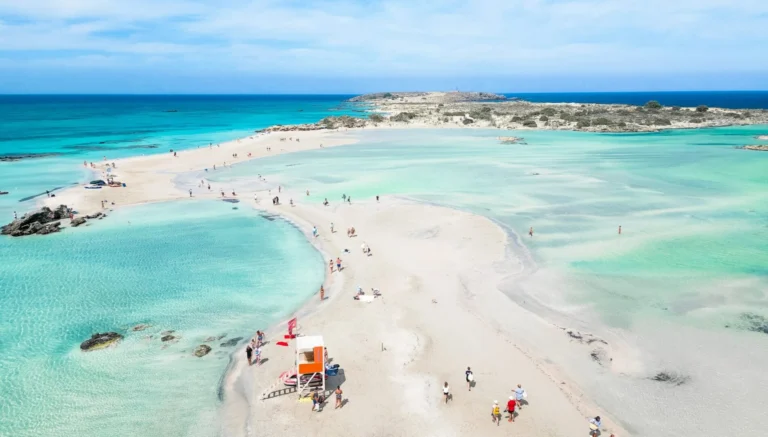
“When should we come?” is the question our guests ask most, right after “how far is the beach?”. The honest answer depends on what you want from Elafonisi: the warmest sea, an empty lagoon, long evenings or the lowest prices. Each of those has its own month.
We live and host guests a few minutes from the beach, so this guide goes through the year as we know it: the sea and air temperatures, how busy it gets, when the sun sets, and what is open. At the end you will find the months we would pick ourselves.
The short answer
- Best all round: June and September. The sea is 22–26 °C, the days are long and there are far fewer people than in August.
- Quietest months you can still swim: May (sea around 19 °C) and October (around 24 °C, cooling to 22 °C by the end of the month).
- Warmest sea: August and September, around 26 °C on average.
- Busiest: mid-July to the end of August, from about 11:00 to 17:00. Come before 9:30 or after 17:30, which is easy if you stay nearby.
- November to April: wild and beautiful for walks, but the sea is cool and most tavernas and holiday homes, ours included, are closed.
Elafonisi month by month
Here is the whole season side by side. Sea temperatures are 10-year averages for Elafonisi; air temperatures are long-term averages for Chania, and the south-west coast is similar.
| Month | Sea | Day / night | Sunset | Crowds |
|---|---|---|---|---|
| May | 19 °C | 24 / 15 °C | 20:10–20:35 | Quiet |
| June | 22 °C | 29 / 19 °C | 20:35–20:45 | Moderate |
| July | 25 °C | 30 / 21 °C | 20:45–20:30 | Busy |
| August | 26 °C | 30 / 21 °C | 20:30–19:55 | Very busy |
| September | 25–26 °C | 27 / 19 °C | 19:55–19:10 | Busy, then calm |
| October | 24 °C | 23 / 16 °C | 19:10–18:35* | Quiet |
| November–April | 16–21 °C | 14–20 / 8–12 °C | 17:10–20:00 | Very quiet |
* Greek clocks go back on the last Sunday of October (31 October in 2027); after that the sun sets around 17:30.
May: the quiet start
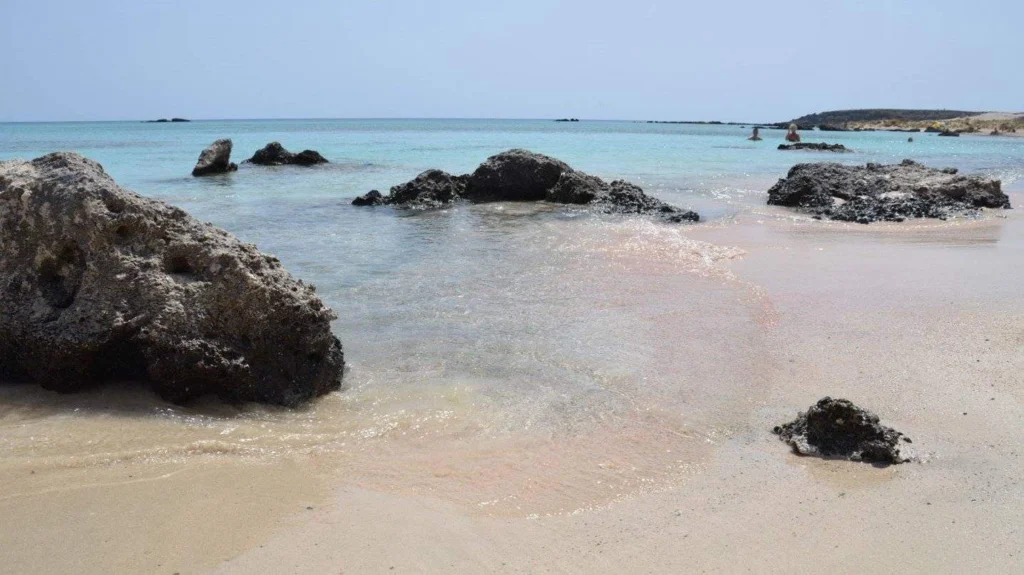
May is when the season begins. The hills behind the beach are still green, the thyme is in flower and on a weekday you can have a whole stretch of the lagoon to yourself. Days are warm, around 24 °C, and it rarely rains for long.
The open sea is fresh at about 19 °C, but the shallow lagoon warms up in the afternoon sun and is lovely for paddling. Early in the month not every canteen or umbrella row may be running yet, so bring water, snacks and some shade.
May suits walkers, couples and families with small children who are not tied to school holidays. It is also a good month for the E4 coastal path from Elafonisi to Kedrodasos, about an hour on foot, before the summer heat. In 2027, Greek Easter falls on 2 May: expect church bells, candles at midnight and lamb on the spit in every village, and more Greek visitors at the beach that weekend.
June: our favourite all-rounder
If we had to choose one month, it would be June. The sea climbs from about 22 °C to 24 °C, the days are the longest of the year and the sun does not set until about 20:40. The lagoon is warm and calm, and the crowds of high summer have not arrived yet, especially in the first half of the month.
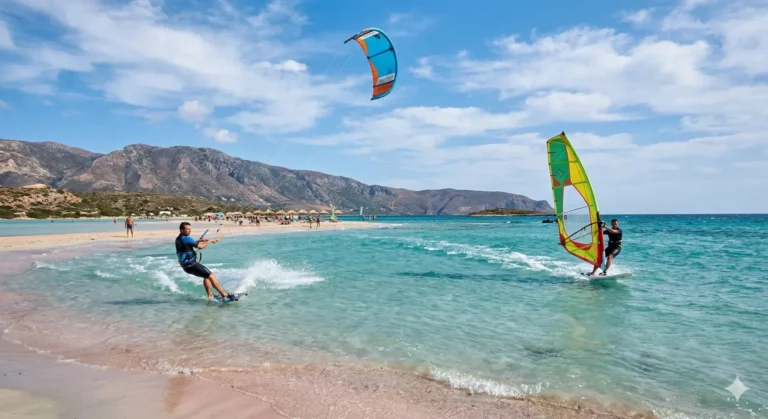
Afternoon breezes start to pick up, which the kitesurfers love (see our guide to kitesurfing at Elafonisi and Falassarna), while mornings are usually still. June is ideal for families with young children: warm, shallow water without the heat of July and August.
July and August: high summer, the local way
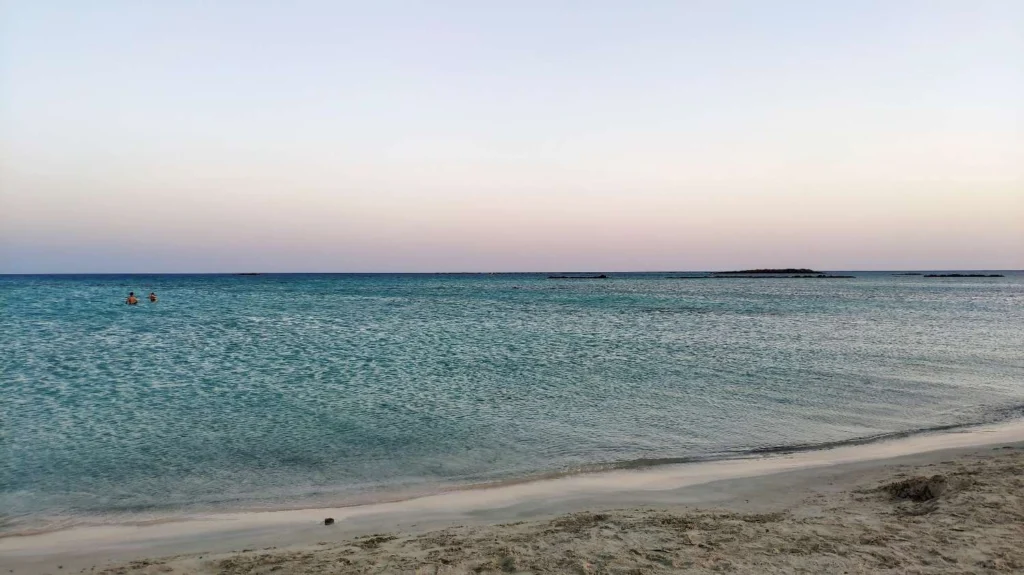
July and August bring the warmest weather, around 30 °C by day, and a sea of 25–26 °C. They also bring the crowds: on a peak day thousands of people visit Elafonisi, most of them on day trips from Chania and Rethymno. The parking areas can fill up by late morning, and a free umbrella is hard to find in the middle of the day.
On 15 August, the feast of the Virgin Mary, the Chrisoskalitissa Monastery celebrates its feast day and pilgrims come from all over Crete, so expect busy roads around the monastery on the 14th and 15th. In late summer the white sea daffodils flower in the dunes: they are protected, so enjoy them from the paths.
The beach is still wonderful in high summer if you go at the right time. This is how a day at Elafonisi changes:
| Time | What it’s like in July and August |
|---|---|
| Before 9:30 | Calm, clear water, cool sand and easy parking. The best light for the colours of the lagoon. |
| 11:00–17:00 | The busiest hours: day-trip coaches, full umbrella rows, the strongest sun. |
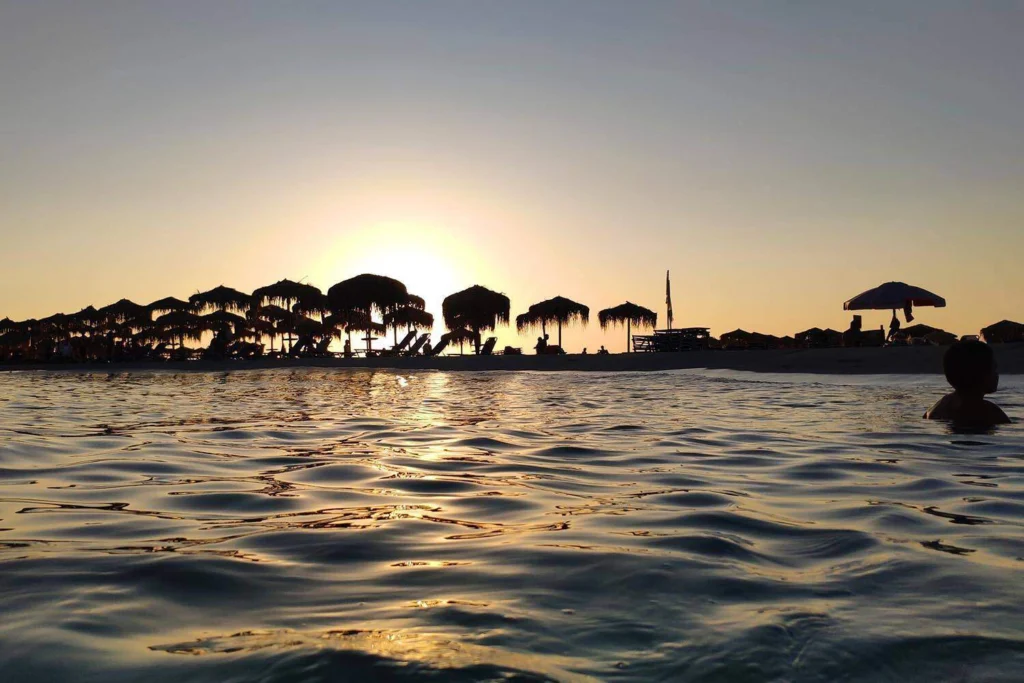
| After 17:30 | The crowds thin out and the light turns golden. After 18:00 umbrellas are usually easier to find. |
| Around 20:30 | Sunset over the sea, with the beach almost to yourself. |
Doing this from Chania means about three hours of driving a day, so staying nearby makes all the difference: an early swim, a long lunch and a siesta at home, then back to the beach for the evening. Our guide to where to stay near Elafonisi compares the villages around the beach. If summer is your only option, book early: July to September fill up first, and most of our summer nights are booked months ahead.
September: the warmest sea
September is the secret of those who know Crete. The sea has had all summer to warm up and stays at 25–26 °C, warmer than in July. Days are still summery at around 27 °C, but softer, and the evenings are pleasant for dinner outside.
The first half of the month is still busy while Europe finishes its holidays. After mid-September it gets noticeably calmer, the sun sets earlier and more golden, around 19:30, and the long, empty beaches around Elafonisi’s quieter neighbours are at their best.
October: summer’s quiet encore
October is the month most people overlook. The sea is still around 24 °C at the start of the month and about 22 °C at the end, which most swimmers find perfect, while the days are a mild 23 °C. You will often share the lagoon with only a handful of people.
The weather becomes more changeable. Chania averages about ten days with some rain in October, and a windy day is more likely than in summer. The days are shorter too: the sun sets around 19:00 at the start of the month and around 17:30 once the clocks go back. Some beach canteens and tavernas close during the month, so check before you go, and bring your own shade.
It is a beautiful month for walking: the E4 path to Kedrodasos, the coast around the monastery and the chestnut woods around Elos, where the harvest is in October. Prices at our stays are among the lowest of the season, and it is the last month we are open.
November to April: wild and empty
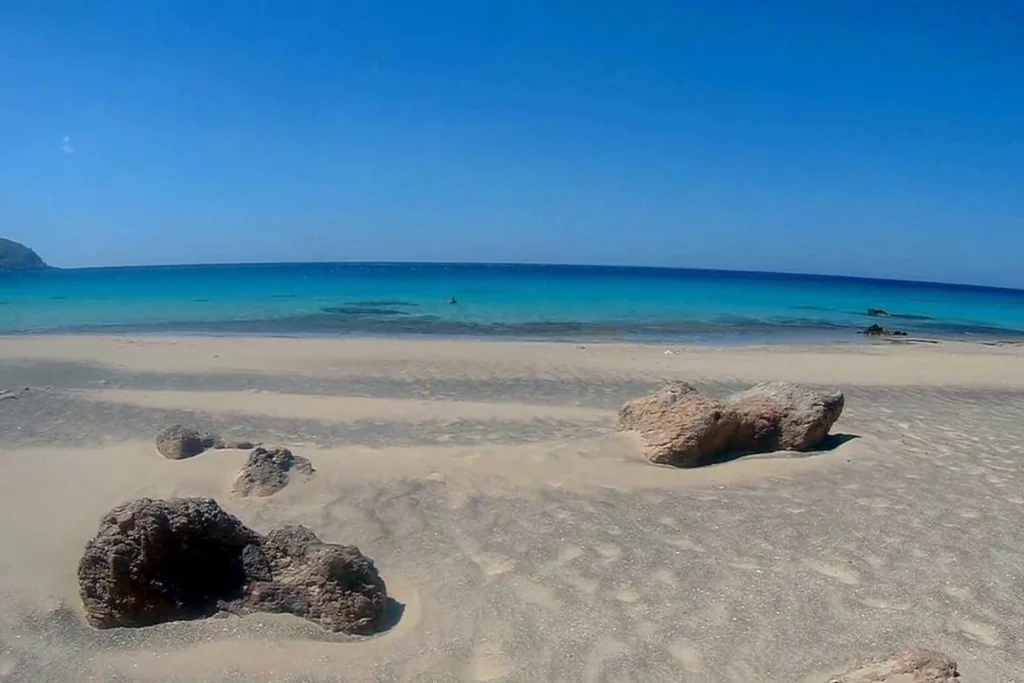
Outside the season Elafonisi is a different place: wind, waves, an empty beach and dramatic skies. It is lovely for a walk and for photographs, but the sea is cool at 16–21 °C, most rain falls between November and March, and the road over the mountains can be wet. Most tavernas, canteens and holiday homes near the beach, including ours, are closed.
If you visit Crete in winter, stay in Chania or Kissamos and come to Elafonisi for the day. April brings wildflowers and green hills, but the sea, at about 17 °C, is for the brave.
Which month is right for you?
| If you want… | Come in… | Why |
|---|---|---|
| The warmest sea | Late August and September | The sea is at about 26 °C after the summer. |
| To swim without the crowds | Late May, June, late September and early October | Warm enough to swim, with a fraction of the August visitors. |
| A holiday with young children | June or September | A warm, shallow lagoon without the July and August heat. |
| Long evenings | June and July | Sunset around 20:40, the latest of the year. |
| Walking and hiking | May and October | Mild days for the E4 path and the hills. |
| Kitesurfing and windsurfing | June to September | Steady afternoon winds over the lagoon. |
| The lowest prices | May and October | Our stays cost less than in high summer. |
Plan your stay near Elafonisi
Whatever the month, the best hours at Elafonisi are early in the morning and in the evening, and those are easiest when you sleep a few minutes away. Our five stays are open from May to October, in Chrisoskalitissa, about 5 minutes from the beach, and in the village of Plokamiana, about 15 minutes away. Nights in May, early June and October cost less than in high summer, and each stay has a kitchen or kitchenette for easy breakfasts and beach picnics.
-
Plokamiana · 15 mins to Elafonisi
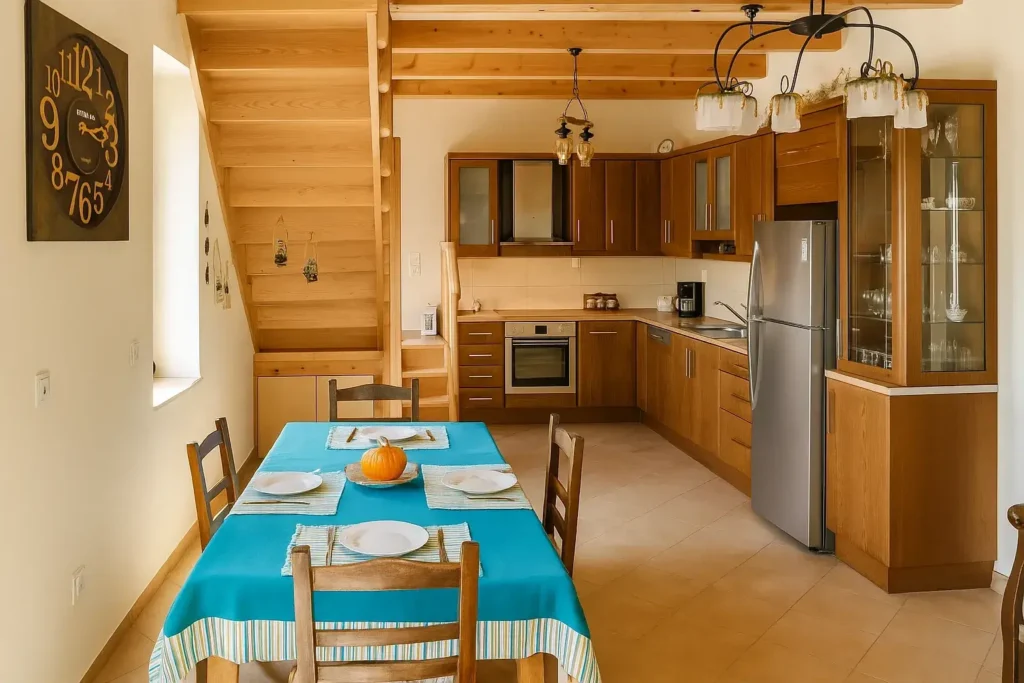
Viva House
Space for the whole family, in the heart of village life.
Sleeps 5
2 bedrooms
75 m²
-

Plokamiana · 15 mins to Elafonisi
Elafonisos Studio
Traditional character, outdoor space and room to unwind.
Sleeps 2
30 m²
-
Plokamiana · 15 mins to Elafonisi
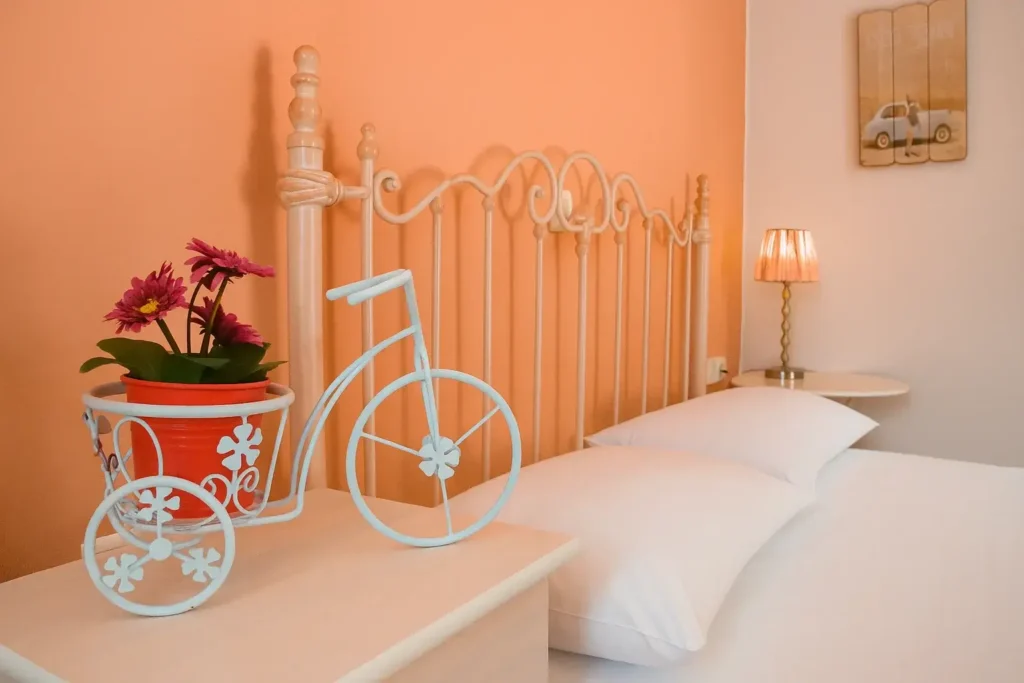
Viva Studio
A simple, comfortable base for two in Plokamiana.
Sleeps 2
19 m²
-

Chrisoskalitissa · 5 mins to Elafonisi
Yalos Standard Studio
A private patio and a relaxed base near Elafonisi.
Sleeps 2
29 m²
-
Chrisoskalitissa · 5 mins to Elafonisi
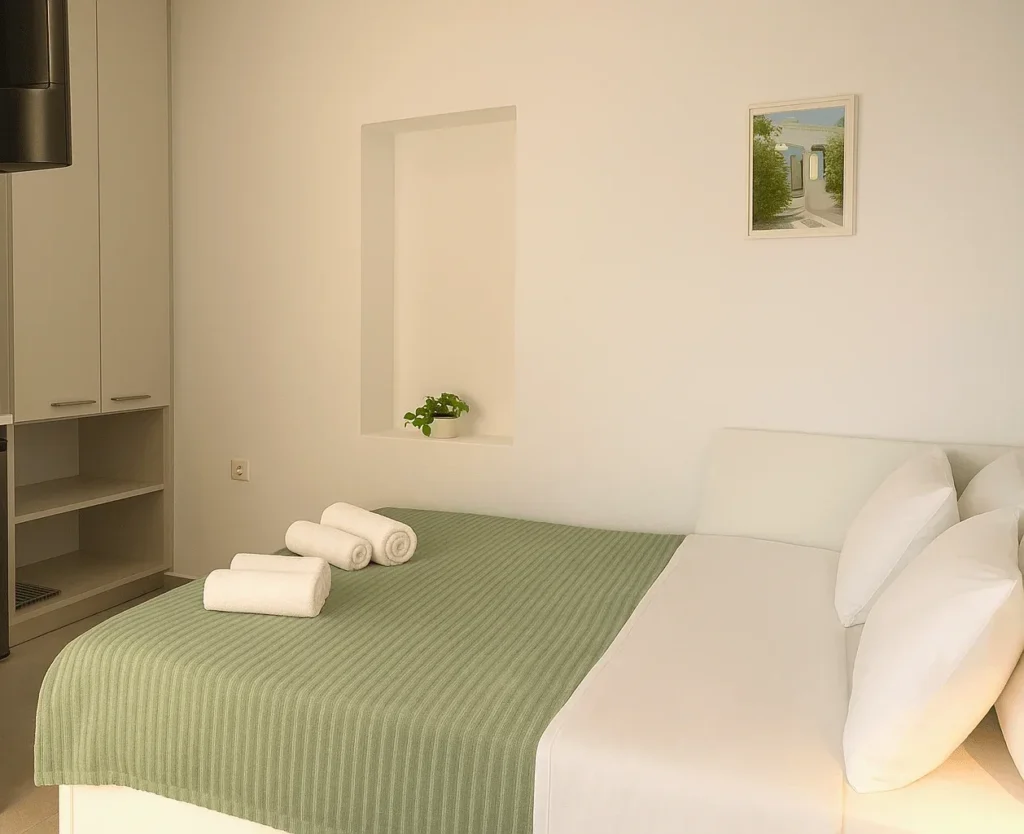
Yalos Tiny Studio
A compact coastal hideaway with your own terrace.
Sleeps 2
16 m²
When you book directly with us, cancellation is free up to 14 days before arrival, and nothing is charged until then.
Frequently asked questions
June and September. The sea is warm (22–26 °C), the days are long and sunny, and there are far fewer visitors than in July and August. For the quietest beach with a sea you can still swim in, choose late May or early October.
Outside July and August, and at any time of year before 9:30 in the morning or after 17:30. In high summer the busiest hours are from about 11:00 to 17:00, when the day trips from Chania and Rethymno arrive.
Yes for most people. In May the sea averages about 19 °C, refreshing, and the shallow lagoon warms up in the afternoon sun. In October it averages about 24 °C, warmer than in June, cooling to about 22 °C by the end of the month.
Yes, the beach is open all year and it is beautiful for walks and photographs. But the sea is cool, there can be strong wind and rain, and most tavernas and holiday homes near the beach are closed from November to April.
Early in the morning, for calm, clear water and space to yourself, and in the evening, when the day-trippers have left and the sun sets over the sea: around 20:30 in summer and around 19:00 in early October.
It can be. Elafonisi is open to the north-west wind, and on many summer afternoons a breeze picks up, which is why kitesurfers come here; mornings are usually calmer. Strong winds are more common from October to April.
All year, but the colour is strongest at the water’s edge and around the lagoon after a windy day, when the waves wash up fresh fragments of shell. Soft morning and evening light shows it best; at midday in bright sun it looks paler.